Antonia Rolls
Artist Extraordinaire
Beloved, bringing suicide and addiction deaths into the light
Click to learn more…
Addicts and those who love them
Click to learn more…
A Graceful
Death
Click to learn more…
Beloved, bringing suicide and addiction deaths into the light.
“Beloved” is a new project following on from the “Addicts and Those Who Love Them” exhibition. As is the case for so many of us with addiction in our lives, both my boys did not survive. One son was twenty nine, the other was twenty seven.
Beloved is an exhibition of paintings about bringing these tragic and desperate deaths out of the darkness and into the light. It is about finding light and consolation where we think there is none. The exhibition is about all those who die in darkness, despair, and loneliness. At the moment of their deaths, they are collected by The Beloveds, those who have died in this way before them and now work in the light to come to them and say that they are safe now, the pain is over, and they are loved. They are taken up into the light, held and comforted by The Beloveds in great peace for as long as they need to recover. At some point, if they choose it, they become Beloveds too and work to bring light, consolation, healing and love to those needing them here on earth.
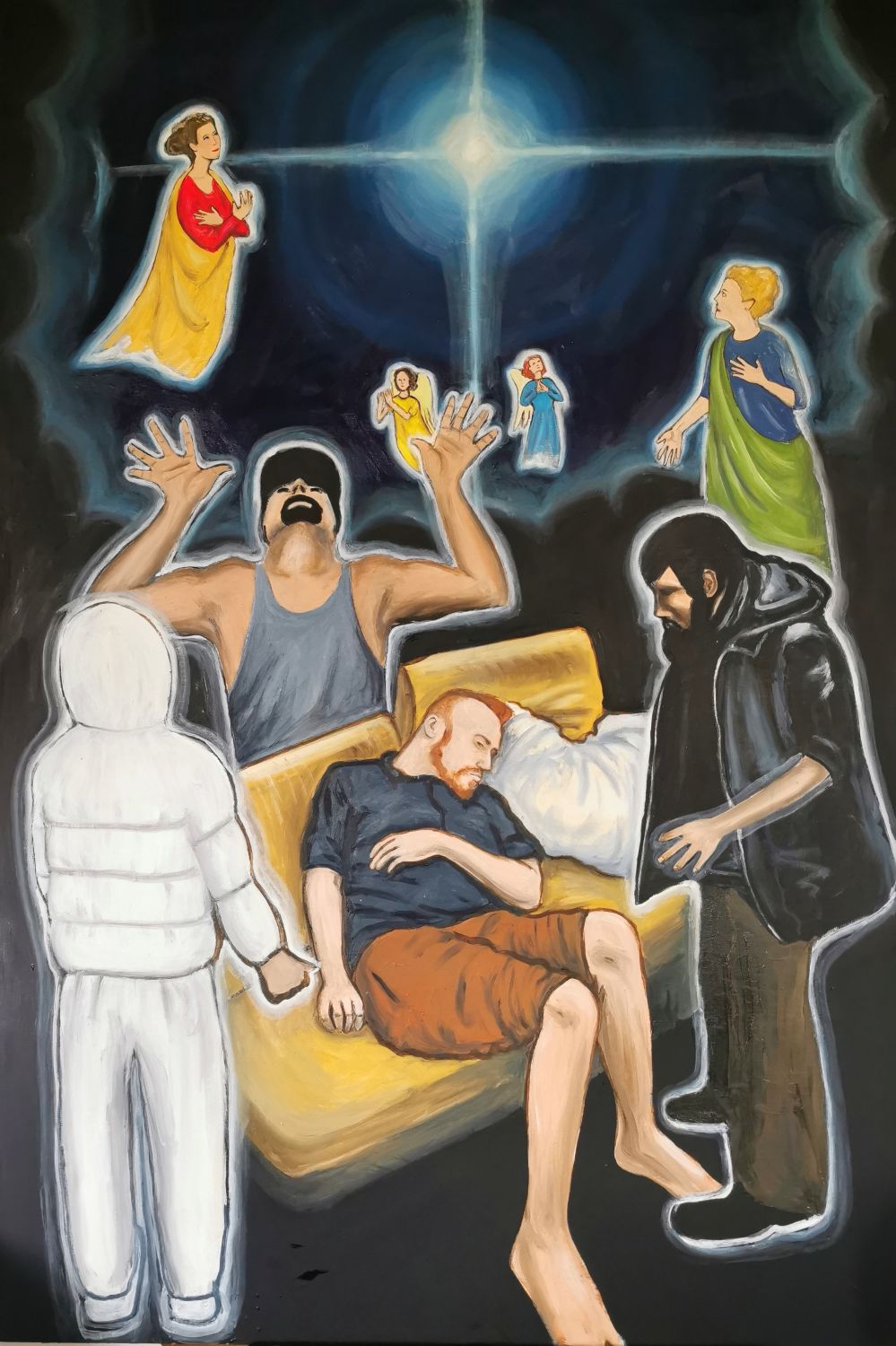
Ascention, Costya collected by Beloveds
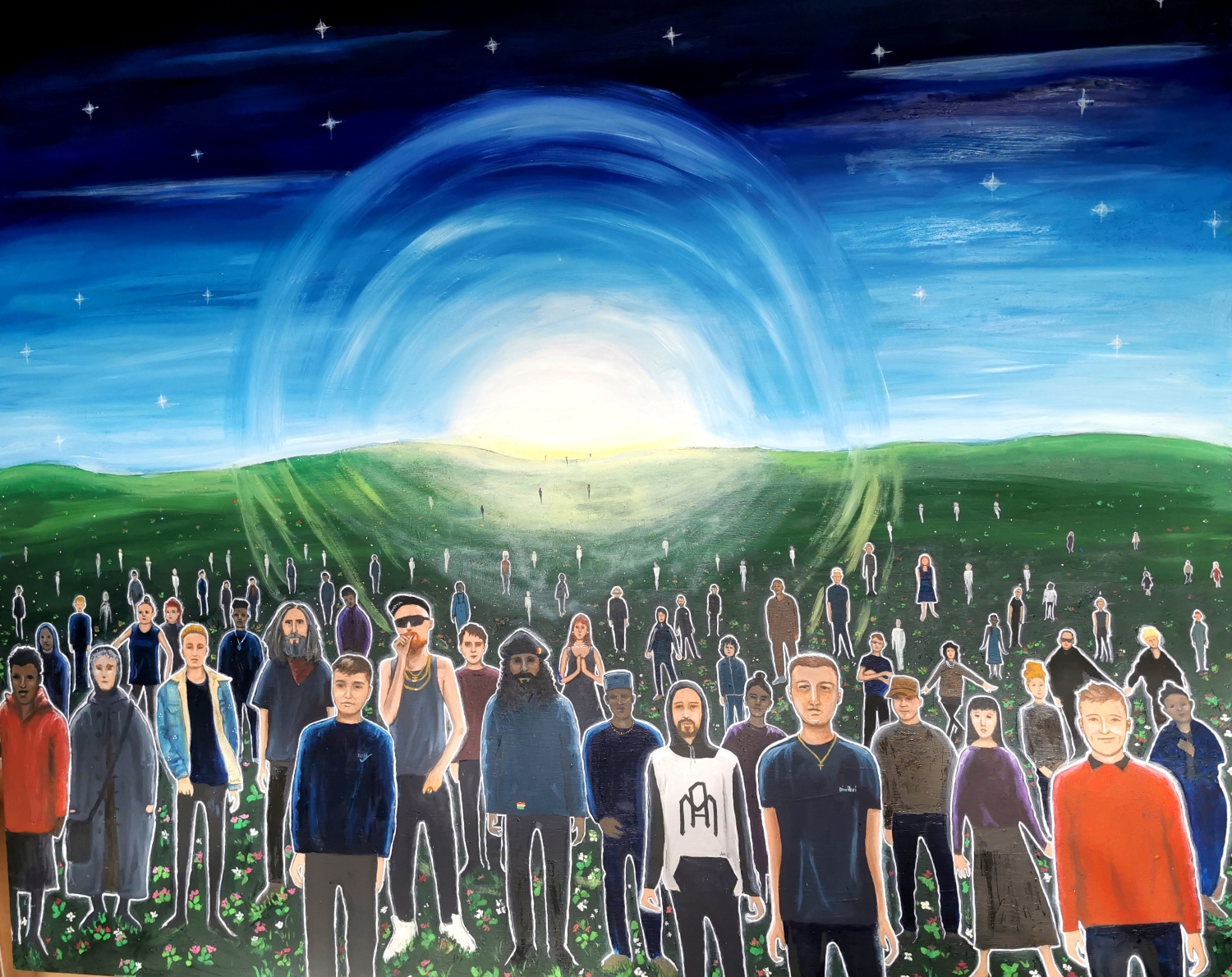
Beloveds – Finished February 2025
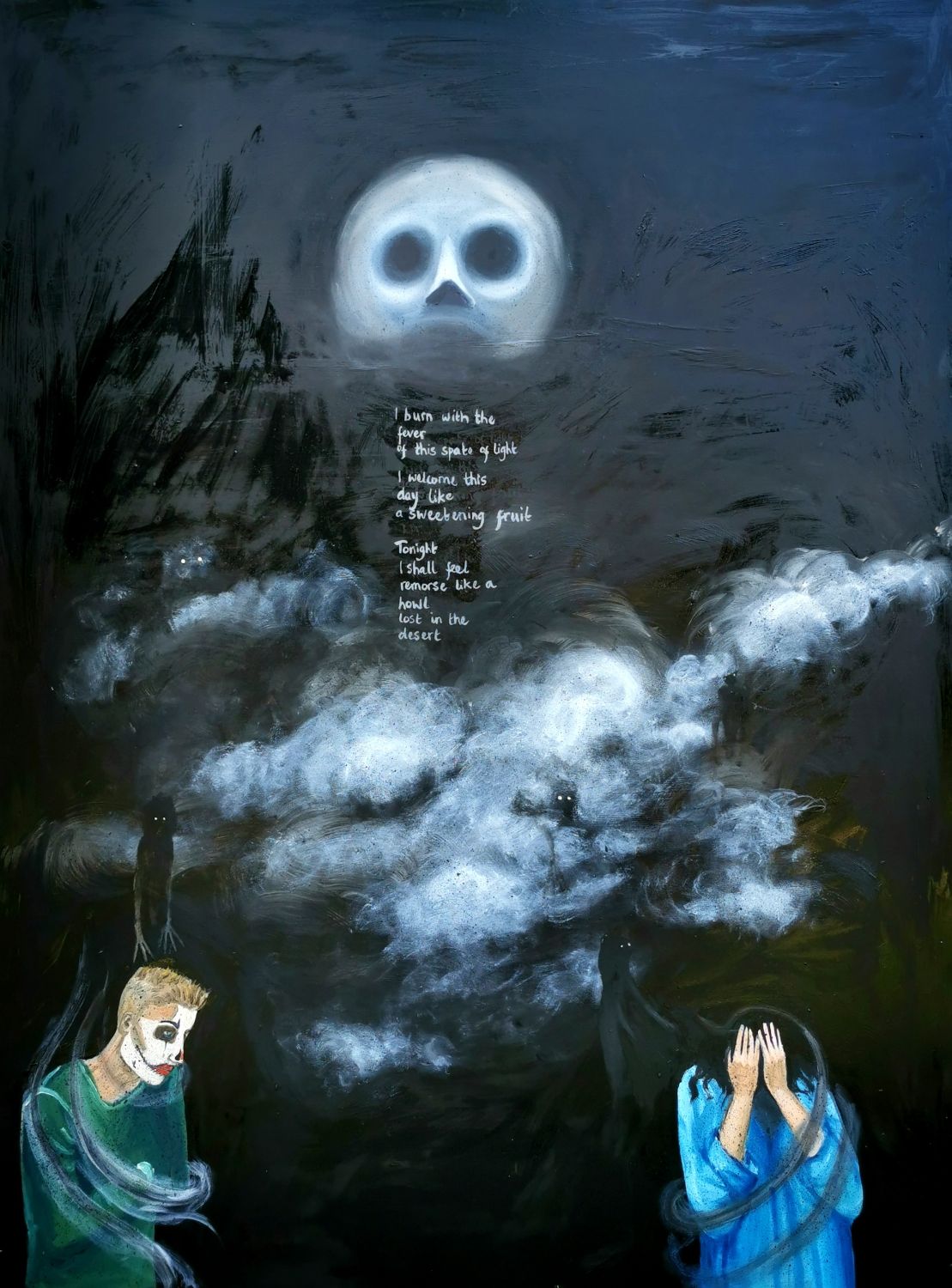
Light, dark and light diptych
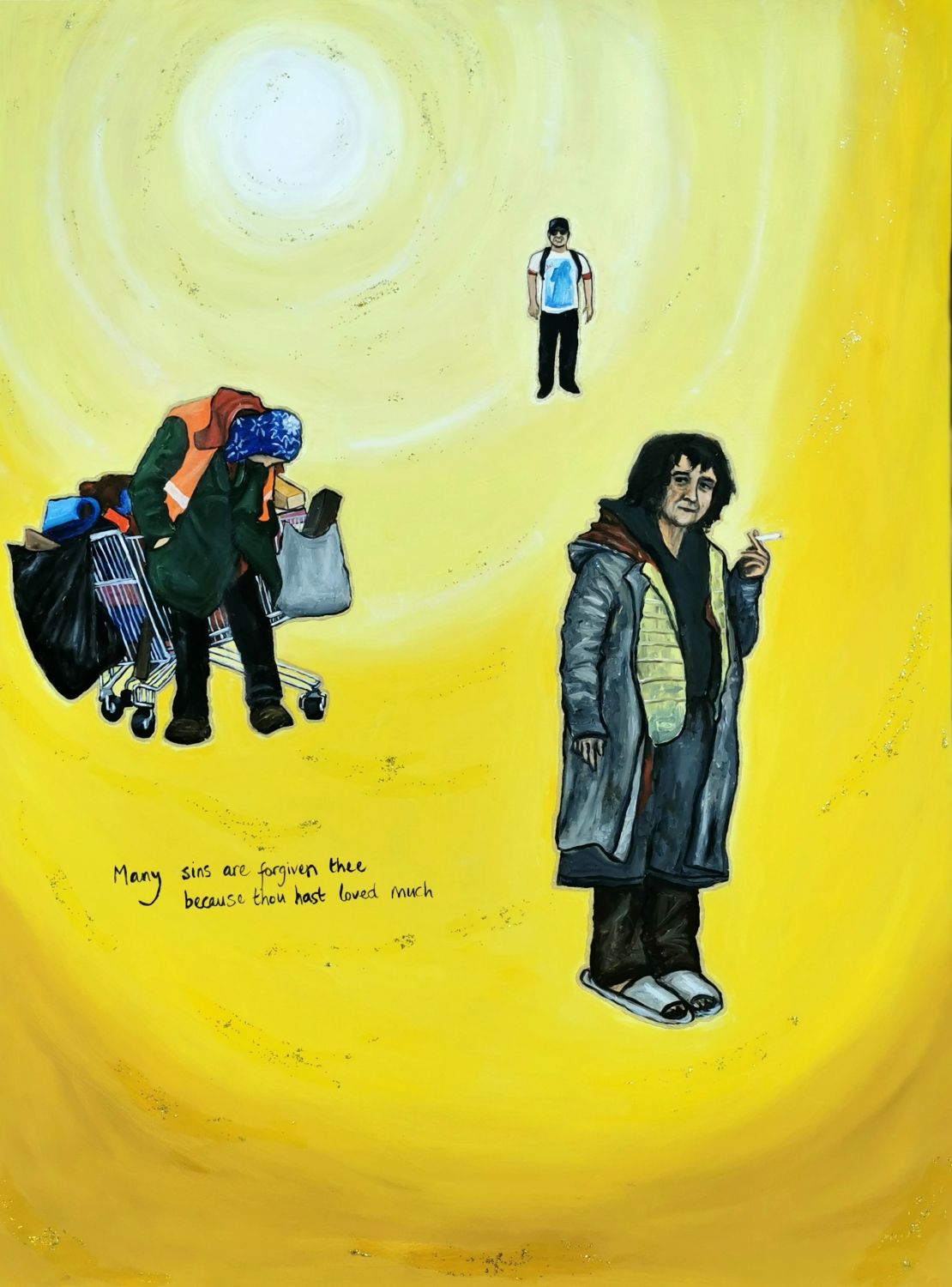
Dark, dark and light diptych – April 2025
Masha Tiunova for recovery-arts.org
“Over the past month, I have been reflecting on Antonia’s new exhibition, having first seen it at the Brighton Fringe. I met Antonia Rolls in 2023 at the Edinburgh Fringe, where she exhibited Addicts and Those Who Love Them, the year her elder son died of addiction. I was fortunate to become friends with her. During the following two years, her younger son died by suicide and from addiction. It takes time to process death—death in the form of art, death not merely observed in an exhibition but connected to someone I care for. Around the time of Antonia’s younger son’s death, my first AA sponsee died of food poisoning; someone I dated many years ago took their own life while under the influence; and a new friend died from an addiction I had been unaware of.
As a society, we are afraid of death. I grew up in a village where keeping an open coffin in the house for three days was tradition, and it was thought beneficial to have children nearby, as we somehow facilitated the soul’s departure to better places. My favourite childhood food was pancakes with honey, served at Russian funeral dinners. They served them—with vodka—when my father died from addiction, when I was in my twenties. His body was not kept at home, as the tradition was starting to die out. We had grown too afraid of death and too practical to keep it so close. Deaths from addiction are particularly uncomfortable to witness: addiction is viewed as dirty, and such deaths are often messy.
Antonia has sufficient strength and love for her lost sons, and also for other addicts who died, to see through this messiness—to perceive the light, the magic, the multidimensionality of life and death. You can look at it. And for many of us, it is essential to look, not to bury it within our psyche as the body is buried in the ground. We are alive, and we need to stay with this truth to remain alive.
I have been sober for over fifteen years now. I am sober enough not to judge who succeeds and who does not. I am certainly not superior to anyone else, in addiction or in recovery. The thirst for wholeness—addiction, as Christina Grof termed it (her book led me to AA)—is something we all share. We attempt to achieve it through alcohol and drugs, but for us addicts they have the opposite effect: we seem to drift further from feeling whole with ourselves, with others and with the universe. Some of us manage to approach wholeness in recovery; others only attain it in death.
Antonia’s exhibition suggests that lonely addicts dying from addiction are never truly alone. They are watched over by the Beloveds—other people who died perhaps sad and lonely deaths. These Beloveds collect the souls of the deceased addicts and guide them into the light. Antonia’s perspective on the afterlife reminded me of the Kazakh nomads’ belief that ancestors look after the living. My Kazakh friends told me that even if someone dies by suicide, it signifies that the ancestors have called them to watch over those still alive.
The warmth and beauty of Antonia’s paintings make the fourth dimension visible. Here they are—Antonia and her daughter Lexi—and here they are, Costya and Dmitri, painted as a holy family in a style reminiscent of Russian icons. Costya and Dmitri were half Russian; addiction does not discriminate, but I can sense the weight of Russian toska* they bore throughout their lives – and in death. Antonia’s and Lexi’s love and care for them have been sacred.
We agnostics: if the concept of an afterlife is not something you share, you may still find the very fact of such an exhibition enlightening. I have focused on Antonia’s story, but she did not. All her exhibitions are profoundly communal. People come and shed light on their own beloveds for Antonia to bring into view. See them, remember those you have lost, and make them alive through your memories. Their lives had meaning and purpose, and so did their deaths. The suffering addicts are all around us, and perhaps we can help some of them to become whole while still living.”
Addicts and those who love them.
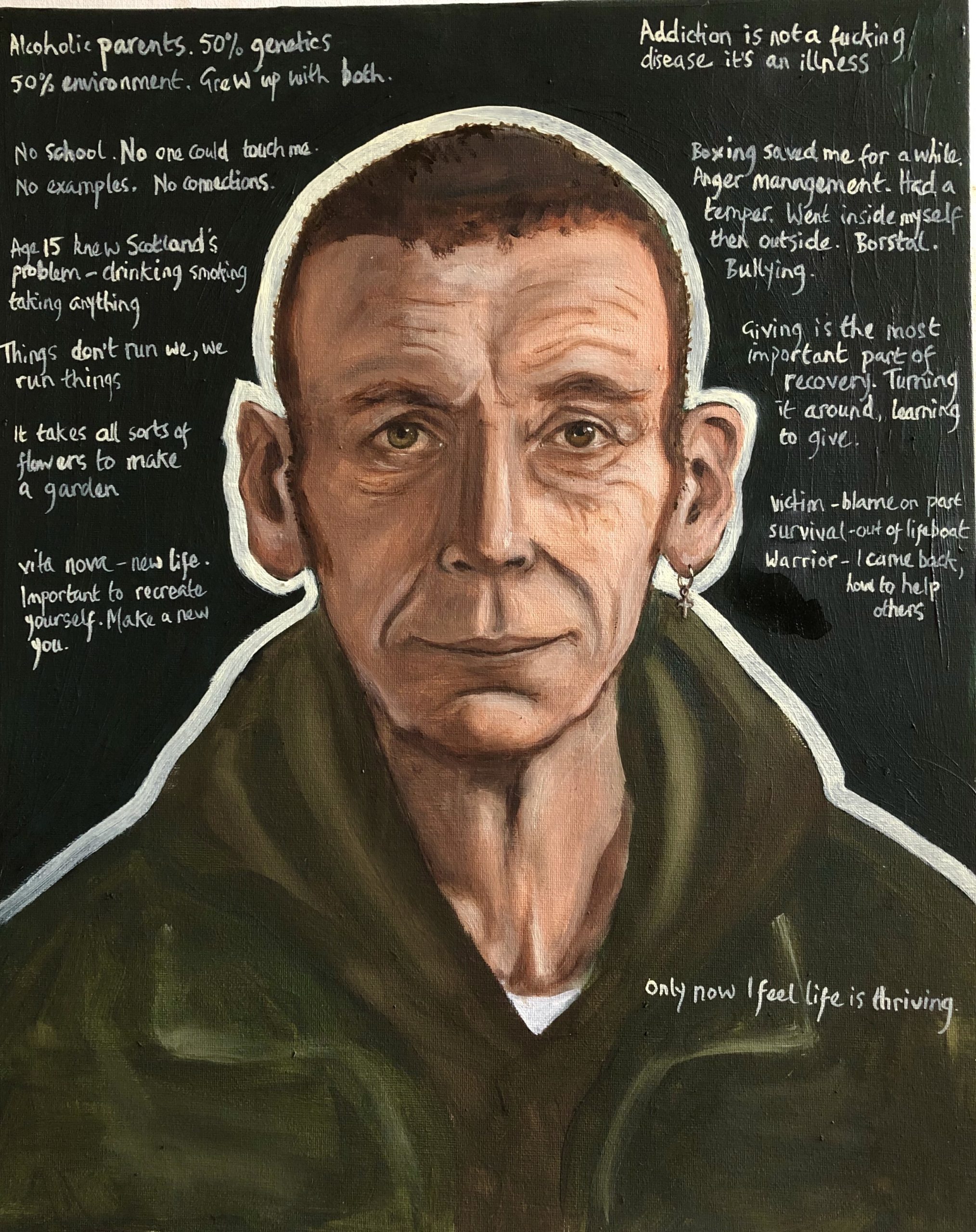
Behind every addict, there is at least one person traumatised by loving them. This ongoing project asks both the addict and the person who loves them to say something about how they are coping.
I paint portraits of each sitter and write what they say on the painting. I am painting each person as an angel or a saint, or at least a divine person, something to do with the dark and the light, the heaven and hell of addiction.
There is addiction in my own life, and I am the person loving an addict. It is desperate most of the time.


A Graceful Death. Portraits and words from the end of life (AGD).
In 2007 my beloved partner died, and in an effort to understand what was happening to him and to me, I painted him as he was dying and on the day of his death.
It was a time of profound loss, grief and pain. I had not experience dying like this before, especially someone that I loved. It changed everything forever. These paintings were the foundation of the A Graceful Death exhibition and the beginning of my work as a holistic end of life companion.
I went on to work with and to paint and interview other people facing the end of their life, asking them two questions – Who are you? and What do you want to say? Over the next eight years, the exhibition has grown to over fifty portraits and words from people facing their own death; wonderful, sad, wise and honest words and images. There are videos, poetry written by visitors to the exhibition, and music. The exhibition is an experience. Powerful, raw and loving, it will move you and inspire you.
It shows at end of life events, conferences, stand-alone exhibitions, medical schools, universities and wherever it is requested to show.
My partner was only with me for eighteen months. I like to think he came, gave me a job to do, and died.
A Graceful Death
“What a wonderful powerful day. I am SO happy to have been here to take part and be part of the A Graceful Death exhibition and exploration. I feel like I’ve met a soul mate/mates, with conditions coming together and interconnections weaving their magic tapestry. Thank you so much for giving yourselves so fully. Deeply moving.”
“As you know, and indeed observed, this was a difficult exhibition of me to visit. Very difficult not to break down. I was with both Mum and Dad when each of them died at home and you have captured the “look” or “ambience” of death which I remember” as it were yesterday”

“It is rare in my experience for people to address death openly, acceptingly. But art is such a wonderful venue for difficult subjects.”
“Thank you for inspiring and providing help through painful experiences for me and so many others. Never hold back because it is the truth in this art that makes it so beautiful.”

“A very moving and interesting exhibition. Really quite beautiful in a very unique way! Very brave and a courageous move.”
“His leaving us was such a painful yet precious experience, and I wanted to hold a little of that forever. Now, through Antonia’s work, I can hold it with the full beauty it deserves. He died his own Graceful Death. The day he died, I visited him. He was asleep and looking so peaceful I couldn’t bear to wake him so I simply kissed him and left. Later that night, the carers walked him to his room, and he was singing to them. Once in his room, as they prepared him for bed, he slipped away.”